

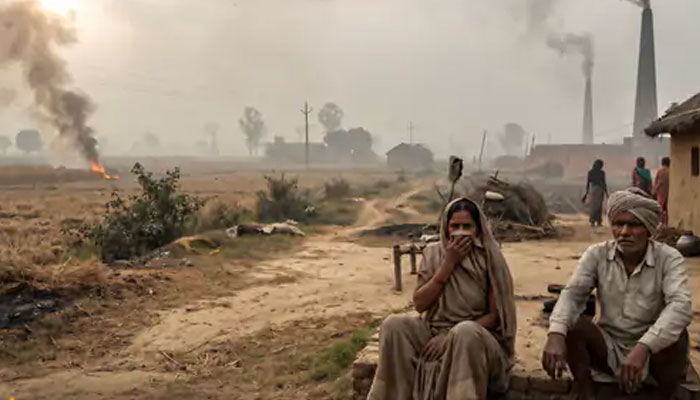
Mumbai/Alive News: Air pollution in India is no longer limited to major cities. Rural areas are also facing worsening air quality, with pollution levels in seven states exceeding national averages, according to a 2026 FICCI report.
The report states that urban pollution levels are higher than rural levels in 22 of the country’s 24 states. However, the findings also highlight the growing pollution burden in villages and smaller towns.
Mumbai, which traditionally benefits from sea breezes that help disperse pollutants, has also experienced a decline in air quality. Its Air Quality Index (AQI) stood at 165 on October 21, compared with 164 in Delhi. Mumbai was ranked the fourth most polluted city in the world, and its AQI reportedly reached 322 on October 24.
Some smaller industrial towns have also recorded pollution levels comparable to or higher than those in major cities. In Byrnihat, an industrial area near the Assam-Meghalaya border, the AQI was recorded at 101.1, compared with 99.6 in Delhi.
Why Mumbai’s Sea Breeze Has Weakened
An anticyclone developed over Gujarat and north Maharashtra after the monsoon withdrew from Mumbai this year. This led to continued easterly winds during October, while the cooling sea breeze remained weak until late at night.
Sea breezes normally help disperse pollutants from the city. Their weakening can contribute to the accumulation of particulate matter, including PM2.5, in the air.
What Does AQI Measure?
The Air Quality Index indicates how clean or polluted the air is and the possible health risks associated with it. It measures major pollutants, including ground-level ozone, particulate matter, carbon monoxide, sulphur dioxide and nitrogen dioxide.
Higher AQI values indicate poorer air quality and greater potential health risks.