

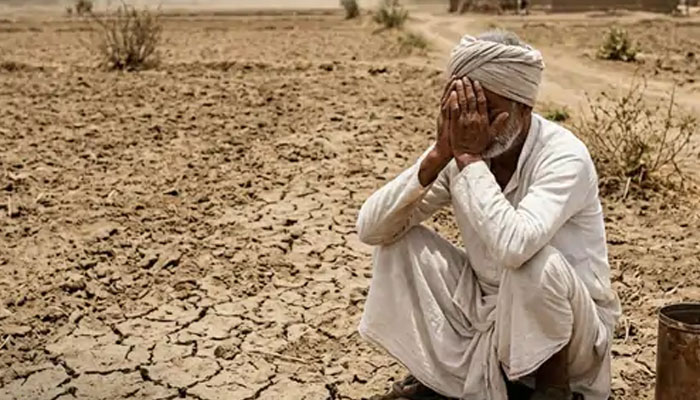
New Delhi/Alive News: Farmers in several parts of India are facing growing financial pressure due to below-normal monsoon rainfall, crop losses and rising agricultural debts. Economists and food policy experts have called for a major financial support package, arguing that the relief measures announced so far are not enough to protect farmers’ livelihoods.
Food policy analyst Devinder Sharma has urged the Centre to introduce an economic stimulus package of ₹1 lakh crore to help farmers affected by drought-like conditions.
“Small relief measures are good, but the government needs to come out with something like a ₹1 lakh crore economic stimulus package,” Sharma said, stressing the need to protect farmers’ incomes during the crisis.
According to the supplied report, the country recorded a 12.3% monsoon rainfall deficit, while crop losses and increasing debt have added to the difficulties faced by farmers in rain-dependent regions. The report also highlights cases of farmer distress and suicides linked to financial hardship.
Five States Face Drought-Like Conditions
The report identifies Maharashtra, Karnataka, Tamil Nadu, Telangana and Andhra Pradesh among the states facing drought-related agricultural challenges.
Maharashtra has been particularly affected, with the report stating that 305 of its 358 talukas have been declared drought-affected. These states are major producers of crops such as rice, cotton, sugarcane, pulses, maize and groundnuts.
Deficient rainfall has also affected sowing during the kharif season. According to the figures cited in the report, the overall kharif sowing area declined by around 1%, while paddy cultivation fell by 16.32 lakh hectares.
The Union Agriculture Ministry’s reported reduction in the foodgrain production target for 2026–27, from 376.56 million tonnes to 373.93 million tonnes, has further highlighted concerns about agricultural output.
Rabi Sowing Faces Water Shortage Concerns
The impact of poor monsoon rainfall could extend into the rabi season, which runs broadly from October to March. Wheat, mustard, barley, gram and lentils are among the major crops grown during this period.
Lower reservoir levels in parts of central and southern India could affect water availability for irrigation. Farmers dependent on rainfall may face additional soil moisture shortages, potentially increasing cultivation costs and reducing yields.
The report also points to El Niño as a possible weather-related risk. The climate phenomenon involves warming in parts of the Pacific Ocean and can influence rainfall patterns across the world. However, its specific impact on India’s monsoon depends on wider atmospheric and oceanic conditions.
Existing Relief Measures May Not Be Enough
State governments have reportedly introduced several interim measures to support affected farmers. These include financial assistance for crop losses, restructuring of short-term agricultural loans, subsidised electricity for irrigation and emergency water supplies for people and livestock.
Experts argue that such steps need to be supported by a broader financial and employment programme to help rural households cope with prolonged agricultural distress.
Economists Call for 150 Days of Rural Employment
Professor Venkatesh Athreya, formerly associated with Bharathidasan University, has called for stronger government intervention to address rising agricultural costs, falling yields and rural indebtedness.
He has stressed the need to strengthen procurement of foodgrains at the Minimum Support Price (MSP) and provide adequate support to small and marginal farmers.
Athreya has also called for expanding the Mahatma Gandhi National Rural Employment Guarantee Scheme (MGNREGA) from 100 to 150 days of guaranteed employment per registered rural household each year. The proposal is intended to provide additional income to agricultural labourers and rural families affected by crop losses.
Experts say a comprehensive relief package should combine direct financial support, affordable agricultural credit, effective procurement and additional rural employment. They argue that timely intervention is essential to protect farmers’ incomes and prevent further deterioration in rural livelihoods.