

New Delhi/Alive News: The Election Commission of India (ECI) has refused to disclose the name and version of the software used to identify discrepancies in voter lists during the Special Intensive Revision (SIR) process, citing trade secrets and intellectual property rights. The Commission has also not clarified whether artificial intelligence (AI) or machine learning is being used to identify errors in electoral rolls.
According to report, the Commission gave the response under the Right to Information (RTI) Act. It cited Section 8(1)(d), which exempts certain commercially confidential information, including trade secrets and intellectual property, from disclosure.
The Commission also stated that no new software had been developed or purchased specifically for the SIR exercise.
Commission Does Not Clarify Use of AI
An RTI application filed by social activist M.A. Mujeeb Ayub of Karimnagar, Telangana, sought details about the software, its ability to automatically identify discrepancies and the possible use of AI, machine learning and predictive analytics.
The applicant also asked what safeguards were in place to prevent voters from being wrongly flagged and which officials were responsible for reviewing records identified by the system.
In its response dated October 16, the Commission did not clarify whether AI or machine learning was being used. It said questions seeking explanations or clarification did not fall within the definition of information under Section 2(f) of the RTI Act.
On the question of automatic deletion of names, the Commission said that decisions to include or delete voters are taken by the Electoral Registration Officer (ERO) concerned on the basis of facts and records.
The Commission also referred to Section 8(1)(g) of the RTI Act when responding to a question about the review and approval of flagged records. It cited Sections 13B(1) and 13B(2) of the Representation of the People Act, 1950, which deal with the role of electoral registration officers.
Former Chief Election Commissioner Suggests Appeal
Former Chief Election Commissioner O.P. Rawat advised the applicant to approach the appropriate appellate authority. He indicated that legal proceedings could also be considered to seek answers to the questions raised in the application.
The refusal to disclose the software details has brought renewed attention to the use of technology in the SIR process and the safeguards available to prevent eligible voters from being wrongly excluded from electoral rolls.
Two Election Commissioners Had Raised Concerns Earlier
The development comes amid earlier reports about differences within the Election Commission over administrative decisions and the handling of electoral data.
According to an Indian Express report published on September 25, Election Commissioners Sukhbir Singh Sandhu and Vivek Joshi had raised written objections to certain decisions and procedures at least 14 times over a 10-month period.
RTI documents received by activist Lokesh K. Batra reportedly showed that the two commissioners had written separate letters on July 29 to Cabinet Secretary T.V. Somanathan, questioning the conduct of Deputy Election Commissioner Manish Garg.
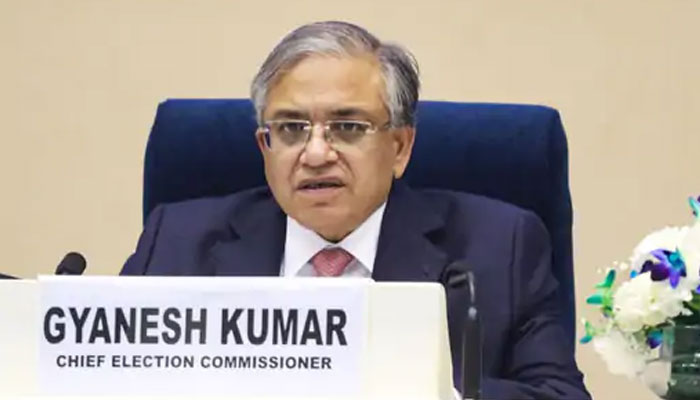
The letters reportedly objected to a work-allocation order that the commissioners said had been issued without the Commission’s approval. The Cabinet Secretariat reportedly forwarded the letters to the office of Chief Election Commissioner Gyanesh Kumar and the Department of Personnel and Training (DoPT).
On September 26, the Election Commission said that the disputed work-allocation orders had not been implemented and that oversight of its IT department had not been removed.
Congress leader Jairam Ramesh also raised questions about Garg’s role and the management of the Commission’s IT systems on October 3.
The latest RTI response has renewed questions about transparency in the SIR process, particularly regarding the technology used to identify discrepancies and the safeguards in place to protect eligible voters.