

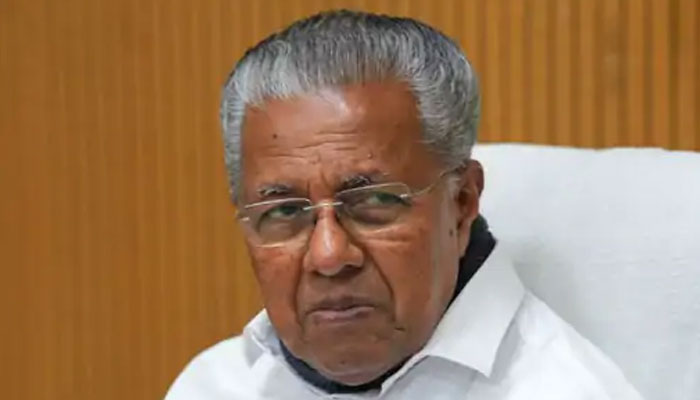
New Delhi/Alive News: The Supreme Court on Wednesday allowed former Kerala Chief Minister Pinarayi Vijayan, his daughter Veena T and former minister Muhammed Riyaz to challenge a Kerala High Court order directing the registration of an FIR in the alleged ₹1.72-crore CMRL-Exalogic payoff case. The top court also stayed the investigation by the Kerala Vigilance and Anti-Corruption Bureau (VACB) for seven days.
A bench of Justices Joymalya Bagchi and V. Mohana set aside the Kerala High Court Division Bench’s October 15 order, which had refused to hear their appeal on the ground that they lacked the legal standing to challenge the FIR direction.
The Supreme Court observed that the earlier Single Bench had found that the information provided by the Enforcement Directorate (ED) disclosed a cognisable offence. This finding could affect the three individuals in future proceedings challenging the FIR, the court noted.
The case began with a petition filed by K.M. Shajahan before the Kerala High Court. The Single Bench directed the VACB to register an FIR under the Prevention of Corruption Act, rejecting the state government’s decision to conduct a preliminary inquiry into the allegations.
The allegations concern payments of ₹1.72 crore allegedly made by Cochin Minerals and Rutile Ltd (CMRL) to Exalogic Solutions Pvt Ltd, a company associated with Veena T, between 2017 and 2020. It is alleged that the payments were made despite no services being provided in return.
The ED has also claimed to have gathered evidence relating to alleged hawala transactions in the case. The accused have challenged aspects of the proceedings, and the allegations remain subject to legal scrutiny.
The Supreme Court’s order does not decide whether the allegations are true. It allows Vijayan, Veena and Riyaz to challenge the FIR direction before the High Court’s Division Bench. The seven-day stay gives them time to pursue that legal remedy.