

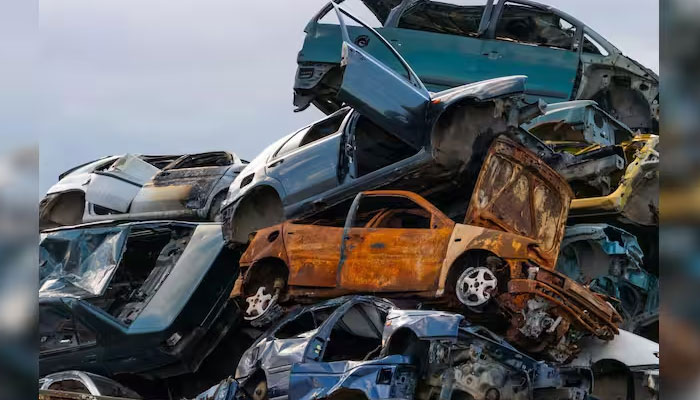
Delhi/Alive News: The Union Environment Ministry has amended the vehicle scrapping rules, providing major financial relief to automobile manufacturers in India. The change will prevent companies that continue operating in the country from recording estimated future vehicle recycling costs as liabilities in their accounts.
The amendment was notified on November 20 under the Environment Protection (End-of-Life Vehicles) Rules, 2025. It comes after the Society of Indian Automobile Manufacturers (SIAM) raised concerns that the rules could create a financial burden of around ₹25,000 crore for the automobile industry.
What Has Changed in the Rules?
Under the amended rules, a provision requiring manufacturers to account for their outstanding vehicle recycling responsibilities will apply only when a company permanently shuts down its operations.
Automakers that continue their business in India will not have to make such financial provisions for future recycling costs under this particular rule.
Earlier, manufacturers feared that the scrapping rules, along with accounting standard Ind AS 37, could force them to record the estimated recycling costs of vehicles sold over previous years as financial liabilities.
Why Did SIAM Raise Concerns?
SIAM had informed the ministry that the rules could create a one-time financial impact of approximately ₹25,000 crore on a gross basis and around ₹9,000 crore after discounting in the financial year 2025-26.
What Happens If a Company Shuts Down?
If an automaker permanently closes its operations, it must submit details of vehicles sold during the previous 15 years for transport vehicles and 20 years for other vehicles to the Central Pollution Control Board (CPCB).
The CPCB will calculate the company’s outstanding Extended Producer Responsibility (EPR) obligations.
How Will Vehicle Scrapping Targets Be Met?
Automakers can meet their recycling targets by purchasing EPR certificates from registered vehicle scrapping facilities through a centralised online portal. These certificates are generated based on the steel recovered from scrapped vehicles.
The amendment aims to provide financial clarity to manufacturers while maintaining their responsibility towards environmentally safe vehicle disposal.