

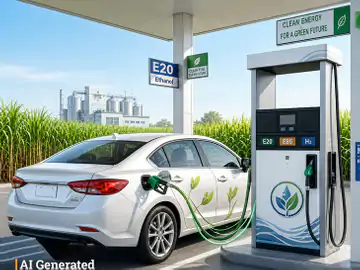
National/Alive News: The Centre has approved the use of E100 fuel in India by amending the Central Motor Vehicles Rules, paving the way for vehicles capable of running on 100% ethanol. The decision comes amid nationwide criticism and concerns over the government’s ethanol-blending policy.
According to an official statement, the amended rules have incorporated E100 fuel alongside E85 in the emission-related provisions. The move is expected to support automakers preparing to introduce flex-fuel vehicles in the Indian market.
Existing Cars Will Not Be Affected
The government has clarified that vehicles designed to run on regular petrol or E20 fuel cannot use E85 or E100. These higher-ethanol blends are permitted only in vehicles specifically designed, tested and certified for them by original equipment manufacturers (OEMs).
Existing vehicle owners will not be required to switch fuels or modify their cars following the notification. The approval establishes an alternative fuel option for compatible vehicles rather than changing the requirements for vehicles already on the road.
How Flex-Fuel Technology Works
Flex-fuel vehicles are designed to operate on petrol and ethanol blends in a single fuel tank. Depending on their specifications and certification, these vehicles can use fuel blends containing up to 85% ethanol or, in the case of E100-compatible models, 100% ethanol. The technology is already used in countries such as Brazil and the United States.
Lower Emissions, Reduced Oil Dependence
The government expects greater ethanol use to help reduce dependence on imported crude oil. Ethanol produced from renewable biological sources, including sugarcane and maize, can also reduce fossil-carbon emissions compared with conventional petrol, depending on how it is produced.
However, the overall environmental benefits depend on the fuel’s production process, land use and vehicle technology.
What Is E100 Fuel?
E100 refers to fuel containing 100% ethanol. Unlike regular petrol and E20, it requires specially compatible engines and fuel systems. The Centre’s approval does not mean that existing petrol cars can switch to E100 without manufacturer certification.