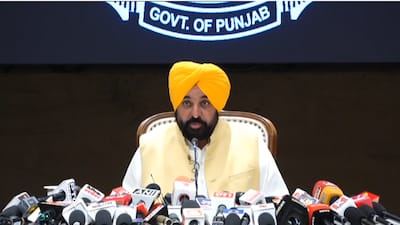
Chandigarh/Alive News: With Punjab Assembly elections approaching in 2027, Chief Minister Bhagwant Mann’s government is expanding its welfare initiatives to reach women, youth, farmers, senior citizens and electricity consumers. The latest addition is ‘Punjab Da Crorepati’, a statewide youth quiz competition launched on Saturday, offering a grand prize of Rs 1 crore.
The initiative aims to familiarise youngsters with Punjab’s history, culture, geography and governance while encouraging preparation for competitive examinations. It also forms part of the government’s wider focus on youth engagement.
Under the Pendu Khed Maidan initiative, the government has inaugurated 1,000 additional village sports grounds, taking the total operational number to 1,764 against a target of 3,100. The project carries a proposed investment of Rs 1,500 crore and aims to promote sports and discourage drug abuse.
Women are another key focus of the government’s welfare agenda. Under the Mukh Mantri Mawan Dheeyan Satkar Yojana, eligible women receive Rs 1,000 monthly, while Scheduled Caste women are entitled to Rs 1,500. More than 76 lakh women had registered by August, with over 68 lakh receiving financial assistance.
For senior citizens, the Mukh Mantri Tirath Yatra Scheme provides free pilgrimage facilities, including transport, accommodation and meals.
Electricity relief remains another major component. The government provides 300 units of free electricity every month, with around 90 per cent of households reportedly receiving zero bills.
Additionally, the One Time Settlement scheme offers a 100 per cent waiver on penalties and interest on outstanding domestic electricity bills up to March 31, 2026. Around 24.86 lakh families are expected to benefit from relief worth Rs 518 crore, although consumers must pay the principal amount.
These initiatives reflect AAP’s attempt to strengthen its welfare-driven governance narrative ahead of the elections. However, unemployment, drug abuse, migration, law and order and the state’s financial condition remain major challenges. Whether the schemes translate into electoral support will depend largely on their implementation and impact on people’s lives.