

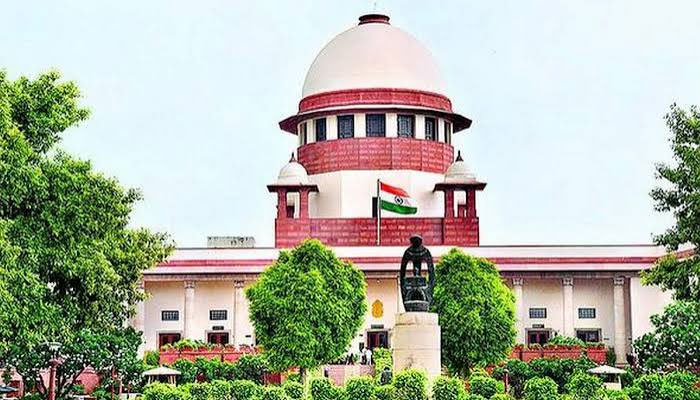
New Delhi/Alive News: The Supreme Court has directed WhatsApp and other digital platforms to inform it about the steps they plan to take to prevent digital arrest scams and other cybercrimes. The court has also asked these platforms to submit their proposals to the Indian Cyber Crime Coordination Centre (I4C).
A bench comprising Chief Justice of India Surya Kant and Justices Joymalya Bagchi and V. Mohana issued the directions while hearing a suo motu case related to victims of digital arrest scams involving forged documents.
The court asked WhatsApp, owned by Meta, and other concerned intermediaries to explain the measures they propose to introduce to prevent such frauds. The matter has been under the court’s monitoring for several months.
A status report submitted by the Central Government highlighted the action taken following the Supreme Court’s directions issued in February this year. According to the report, WhatsApp banned around 9,400 accounts allegedly linked to digital arrest scams and impersonation of law enforcement agencies after an investigation.
In August, the Supreme Court issued several directions to strengthen the prevention of cyber fraud. It asked the Reserve Bank of India (RBI) to prepare a Standard Operating Procedure (SOP) for banks to temporarily stop withdrawals from accounts suspected of being involved in cyber fraud. The RBI was also asked to establish a grievance redressal system and a mechanism to help victims recover their money.
The court also directed all states and Union Territories to make their State Cyber Crime Coordination Centres operational. An Inter-Departmental Committee was asked to examine a framework for shared responsibility and compensation for victims of cyber fraud.The bench further emphasised that banks and financial institutions should compensate victims if an investigation establishes that the fraud occurred due to their failure to follow proper security checks.
It reiterated that the RBI’s proposed regulations should include provisions requiring financial institutions to compensate victims with an amount at least equal to their financial loss in cases where a lack of due diligence by the institution contributed to the fraud.
The court also suggested preventive measures such as temporarily stopping unusual transactions that do not match a customer’s normal banking pattern, automatically informing the nearest police station and physically verifying suspicious transactions.To review the implementation of these measures, the Supreme Court has directed the RBI to submit a list of all authorised financial institutions before it at the next hearing.
The court has also asked law enforcement agencies across all states and Union Territories to provide details of FIRs registered in digital arrest scam cases, the progress of investigations and suggestions for preventing and detecting such crimes. The Directors General of Police (DGPs) have been directed to ensure compliance with these orders.The Supreme Court will hear the matter next on November 23, 2026.